
Every earnings calendar carries one column that does the real work: the surprise. Nasdaq's calendar prints it beside the EPS figure for every reporter, and on the season's peak day, Thursday, October 29, 2026, the column told the whole day in three rows. Amazon reported $1.89 against a $2.01 consensus, a negative 5.97 percent surprise. Eli Lilly printed $7.48, a positive 39.03 percent surprise. Intel printed $0.41, positive 46.43 percent. The market's day, in miniature: the biggest name missed, the drugmaker and the chipmaker blew the doors off.
What a surprise actually is
It is not a grade on the quarter. It is the distance between the reported EPS and the average analyst estimate collected before the print, expressed as a percentage. That definition hides three traps. The consensus is a moving average that herds toward the company's own guidance, so a small miss can mean the guides were sandbagged or the herd drifted. The percentage flatters small denominators: Intel's 46 percent sits on a 41-cent print, while Amazon's 6 percent miss sits on nearly two dollars. And the column is silent on revenue, guidance and cash flow, which is why Amazon's day was really decided by its holiday forecast, covered in the companion piece on this site.
Reading it like a professional
Use the column as a triage tool, in this order: sign first (beat or miss), size second (is the gap bigger than the stock's usual earnings-day move), story third (did guidance confirm the print or contradict it). The season-level view rewards the same discipline: the Zacks outlook carried by Nasdaq put Q3 earnings growth at 26.6 percent year over year on 13.7 percent higher revenues with 300 of the S&P 500 reported, strong enough that the surprises that mattered were the big-cap misses, not the beats.
The column the calendar cannot print
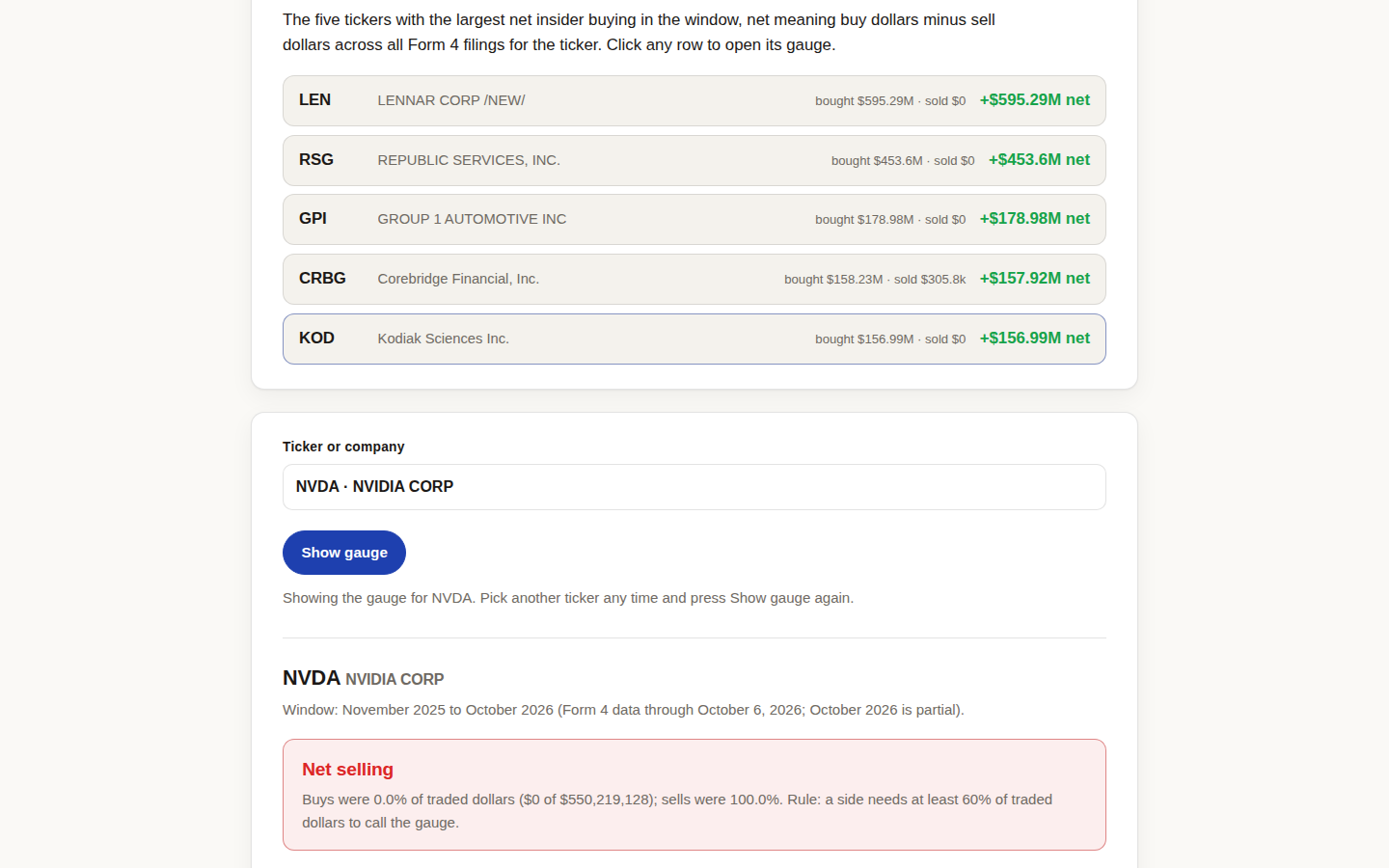
A calendar knows the estimates. It does not know what insiders did while those estimates were forming. Cluster buying in the weeks before a print is the closest thing the public record has to a confidence vote, and it is the input the Insider Sentiment Gauge was built to read across our 9,060-trade database. Surprise tells you what happened. Sentiment hints at who saw it coming.